Why adapt to food trends: boost independents' growth
Discover why adapting to food trends drives 6.4% growth for UK independent retailers. Learn practical strategies for trend adoption, balancing innovation with operations, and building customer loyalty.
Why adapt to food trends: boost independents’ growth
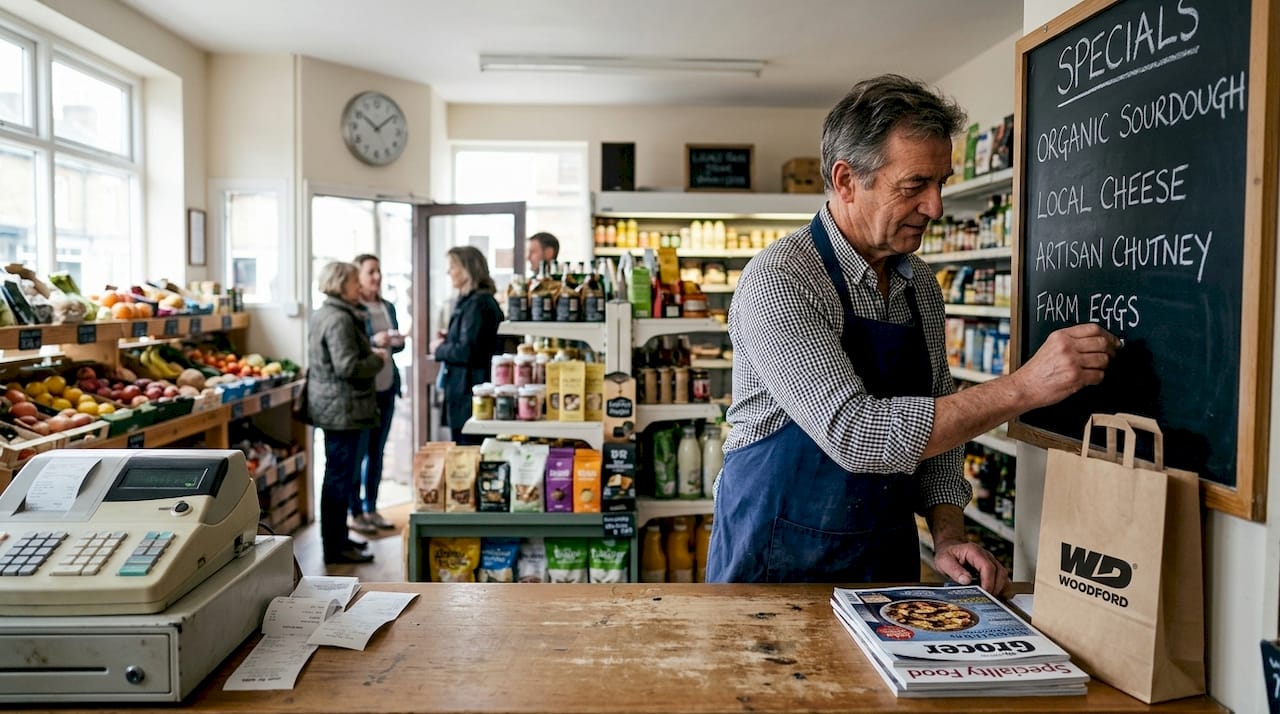
Independent food retailers hold just 5% of Britain’s total food sales, yet during Christmas 2025 they achieved sales growth of 6.4% while major supermarket chains declined by 1.6%. This surprising performance reveals a powerful truth: adapting to food trends isn’t merely about staying current, it’s about carving out a competitive advantage that transcends price wars. When you embrace evolving consumer preferences for provenance, sustainability, and personalised experiences, you transform your shop from a commodity supplier into a trusted destination. This article explores practical strategies for spotting and implementing food trends, balancing innovation with operational realities, and leveraging your unique community position to drive sustainable growth and customer loyalty.
Table of Contents
Key takeaways
The role of food trends in independent retail success
Core methodologies for spotting and adopting food trends
Balancing trend adaptation with operational realities and cost pressures
Leveraging community and curation for sustainable growth
Woodford solutions for food retailers
Frequently asked questions
Key Takeaways
Point | Details |
|---|---|
Trend driven growth | Independent retailers achieved 6.4 percent sales growth over Christmas 2025 while major supermarket chains declined by 1.6 percent, illustrating that adapting to food trends can outperform size. |
Provenance and service | Authentic provenance storytelling and personalised customer service help independents transform into destination shops that large chains struggle to match. |
Hyper local sourcing | Hyper local sourcing and local partnerships reinforce community position and enable rapid responses to evolving tastes. |
Strategic trend selection | A thoughtful mix of selected trends rather than chasing every fad sustains pricing and profitability while keeping operations manageable. |
The role of food trends in independent retail success
Your ability to adapt to food trends directly determines whether you thrive or merely survive in today’s competitive landscape. Independent retailers achieved 6.4% sales growth during the crucial Christmas 2025 period whilst major supermarket chains saw sales decline by 1.6%, demonstrating that size doesn’t guarantee success. This performance gap exists because independents emphasise what large chains struggle to replicate: authentic provenance stories, personalised customer service, and carefully curated product selections that reflect local tastes.
Consider the Great Cornish Food Store, which transformed its business by focusing exclusively on hyper-local sourcing and responding rapidly to emerging consumer preferences for regional authenticity. By positioning themselves as curators of Cornwall’s food heritage rather than generic retailers, they created a destination shopping experience that commands premium pricing and fierce customer loyalty. Their success illustrates how adapting to the provenance trend converts a potential weakness (limited scale) into a powerful strength (unique local expertise).
Londis N16 in North London provides another compelling example. The store evolved from a conventional convenience shop into an award-winning food destination by embracing trends like craft beverages, artisan snacks, and plant-based options. Their transformation wasn’t about chasing every fleeting fad, it involved strategic selection of trends that resonated with their specific customer base and neighbourhood character. This approach allowed them to compete on experience and discovery rather than price alone.
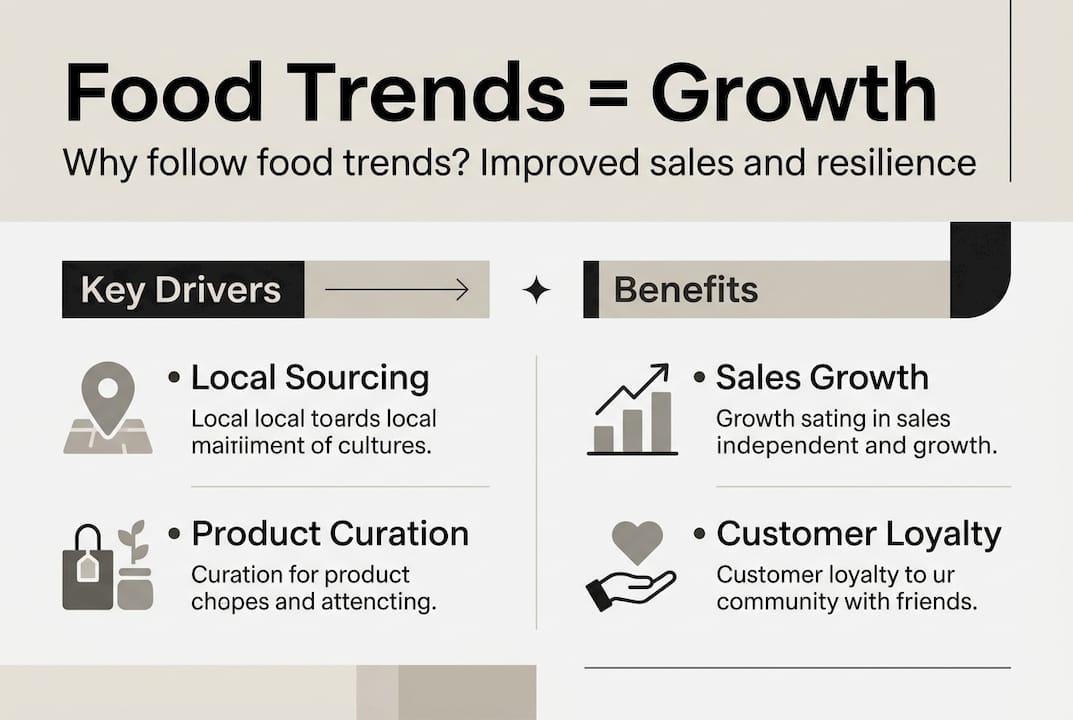
The data reveals a clear pattern: independents who actively engage with food trends create market space that supermarkets cannot easily invade. When you offer carefully selected quality foods that tell compelling stories and reflect genuine consumer shifts towards sustainability, health consciousness, and ethical sourcing, you build a moat around your business that transcends promotional pricing cycles.
“Independents win by turning their scale into an advantage, offering the curation, expertise and personal touch that algorithms and vast warehouses simply cannot match.”
Growth Gap: Independent retailers outpaced supermarket chains by 8 percentage points during Christmas 2025, proving agility beats scale when adapting to consumer trends.
Core methodologies for spotting and adopting food trends
Spotting trends early gives you first-mover advantage in your local market, but you don’t need expensive market research firms to identify what’s coming next. Attending trade shows and monitoring market signals provides direct access to emerging brands, innovative products, and industry insights before trends hit mainstream consciousness. Events like Speciality & Fine Food Fair or Farm Shop & Deli Show offer concentrated exposure to hundreds of potential suppliers and allow you to taste, evaluate, and negotiate terms face-to-face.
Building your online presence through e-commerce platforms and search engine optimisation captures trend-conscious consumers who research products digitally before purchasing. Many shoppers now discover new food trends through online searches and social media, then seek out local retailers who stock those products. By optimising your website and maintaining active social channels, you position yourself as the local authority on emerging food movements, whether that’s regenerative agriculture, low-intervention wines, or functional beverages.
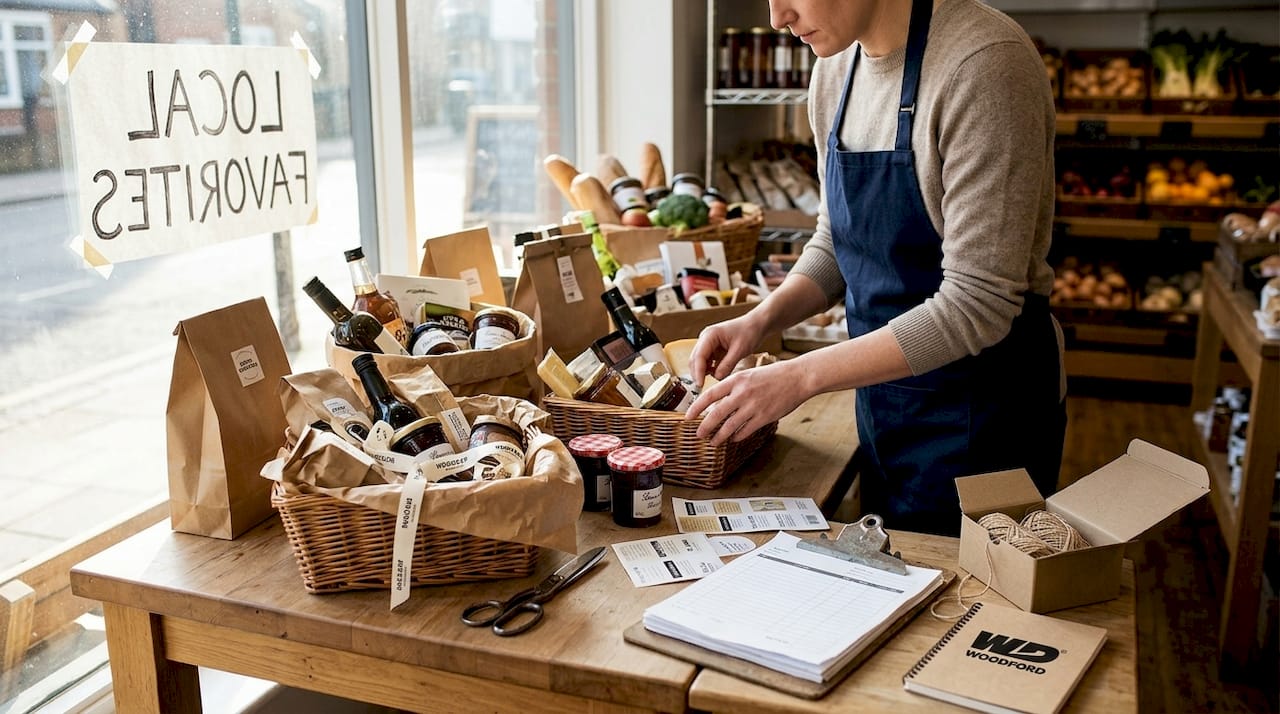
Creating high-margin, story-led products like tailored hampers and gift boxes allows you to bundle trend-forward items with established favourites whilst commanding premium pricing. These curated collections demonstrate your expertise and introduce customers to innovative brands they might not have discovered independently. A well-constructed hamper featuring three emerging trend products alongside two familiar staples serves as both a revenue generator and a gentle education tool.
In-store tastings and demonstrations transform passive browsing into active engagement whilst providing immediate feedback on which trends resonate with your specific customer base. When you invite a local producer to sample their new fermented foods range or host a tasting of natural wines, you create memorable experiences that supermarkets cannot replicate at scale. These events also generate valuable data about customer preferences, helping you refine future trend adoption decisions.
Forging partnerships with local producers and artisan makers gives you access to hyper-localised products that larger competitors cannot source efficiently. A relationship with a nearby cheesemaker, baker, or preserves producer creates exclusive offerings that anchor your identity as a community-focused retailer. These partnerships often prove more flexible than dealing with major brands, allowing you to test small quantities of trend-aligned products before committing to larger orders.
Pro Tip: Track which trend-related products your customers ask about repeatedly, even if you don’t currently stock them. These requests signal genuine local demand rather than industry hype, helping you prioritise which trends deserve shelf space and investment. Create a simple log of customer enquiries to identify patterns over time.
Attend at least two major trade shows annually to maintain awareness of emerging brands and category innovations
Develop basic e-commerce capability and optimise for local search terms related to trending food categories
Schedule monthly in-store tastings featuring one established product and one trend-forward item to gauge customer response
Establish relationships with three to five local producers who align with current sustainability and provenance trends
Monitor trend spotlights and featured brands from wholesalers who curate emerging products specifically for independent retailers
Balancing trend adaptation with operational realities and cost pressures
You face genuine operational challenges that complicate trend adoption, particularly when you’re managing multiple roles from buying to customer service to bookkeeping. The reality of running an independent food retail business means every decision about stocking a new trend-forward product must be weighed against limited shelf space, cash flow constraints, and the constant pressure to maintain competitive pricing on everyday staples. This balancing act becomes even more difficult when 61% of small businesses cite taxation costs and 50% cite energy costs as significant challenges impacting their margins.
The temptation exists to position your entire store around premium, trend-led products, but this strategy risks alienating customers who need competitively priced milk, bread, and other staples. Your customers likely shop at your store for a combination of reasons: some visits are driven by convenience and everyday needs, whilst others are motivated by the desire to discover something special. If your pricing on staples strays too far above supermarket levels, you’ll lose the everyday traffic that provides baseline revenue and opportunities to introduce trend products.
Creating a strategic pricing policy helps you navigate this tension. Identify 20 to 30 key value items (milk, eggs, bread, butter, common vegetables) where you maintain competitive pricing, then use the goodwill and traffic generated by those staples to introduce higher-margin trend products. This approach signals that you understand value whilst still offering discovery and curation. A customer who saves 20p on milk compared to the nearest supermarket feels more comfortable spending £4.50 on a craft kombucha they’ve never tried.
Challenge | Impact | Trend adaptation response |
|---|---|---|
Multi-role operational demands | Time pressure limits research and sourcing | Partner with curated wholesalers who pre-vet trend-aligned brands |
Rising taxation and energy costs | Margin pressure on all products | Focus on higher-margin trend categories that justify premium pricing |
Limited shelf space | Cannot stock everything trending | Select trends with strongest local customer alignment and turnover potential |
Competitive staple pricing required | Baseline products offer thin margins | Use staples as traffic drivers, trends as margin builders |
Cash flow constraints | Cannot invest heavily in unproven products | Start with small quantities, expand based on actual sales data |
The risk of being perceived as too expensive or niche is real, particularly in communities with mixed income levels. Your trend adoption strategy must account for your specific customer demographics and local economic conditions. A neighbourhood with high disposable income and food-enthusiast residents can support more aggressive trend positioning than an area where price sensitivity dominates purchasing decisions. Understanding this balance prevents you from chasing trends that look exciting in industry publications but don’t match your actual market.
Pro Tip: Calculate your actual margin by category monthly, not just overall store margin. This reveals which trend categories genuinely contribute to profitability and which are consuming resources without adequate return. Use this data to prune underperforming trends and double down on successful ones, ensuring your limited operational capacity focuses on what actually drives results.
Leveraging community and curation for sustainable growth
Your greatest competitive advantage lies not in matching supermarket efficiency but in embracing what makes you fundamentally different: deep community roots, personal relationships, and the ability to curate experiences rather than merely stock shelves. Quick response to trends like sustainability and personalisation transforms potential weaknesses into market-defining strengths when you position yourself as a trusted guide rather than a generic supplier. Customers increasingly value retailers who act as filters and educators, helping them navigate overwhelming choice and conflicting information about food trends.
Community engagement strengthens loyalty in ways that promotional pricing never achieves. When you host a local cheesemaker for an evening tasting, sponsor a neighbourhood event, or feature a different artisan producer each month, you create social bonds that transcend transactional relationships. These connections mean customers think of your shop first when they need something special, recommend you to friends, and forgive the occasional out-of-stock situation because they understand you’re a real person managing a complex business.
Acting as a curator means making deliberate choices about which products deserve your limited shelf space based on quality, story, and alignment with your customers’ values. This role requires confidence in your own judgement and willingness to say no to products that don’t meet your standards, even if they’re trending nationally. A carefully curated selection of 15 excellent craft gins creates more value than 40 mediocre options, because customers trust that anything you stock has been vetted and deemed worthy.
Sustainability and personalisation trends align perfectly with independent retailers’ natural strengths. You can source from local producers with transparent practices, explain the story behind products face-to-face, and adjust your range based on individual customer feedback in ways that corporate buying committees cannot match. When a regular customer mentions they’re reducing meat consumption, you can immediately recommend three plant-based alternatives and offer to order specific products they’re curious about. This responsiveness builds profound loyalty.
Host quarterly events featuring local producers and artisan makers to strengthen community ties and showcase trend-aligned products
Develop partnerships with at least five local food artisans whose values and quality standards match your store’s positioning
Create feedback mechanisms (comment cards, casual conversations, social media polls) to understand which trends resonate with your specific customers
Spotlight product stories through shelf talkers, social media posts, and personal recommendations that educate customers about provenance and production methods
Maintain a “try this” section featuring rotating trend-forward products with sampling opportunities and staff recommendations
This community-focused, curatorial approach creates resilience against large chain competition because it’s fundamentally unreplicable at scale. Algorithms cannot replace the conversation where you recommend a specific wine for a customer’s dinner party based on knowing their taste preferences. Centralised buying committees cannot respond to a local food movement as quickly as you can. By leaning into these inherent advantages and aligning them with food trends that matter to your customers, you build a sustainable business model that generates loyalty and growth beyond what price competition alone could ever achieve.
Woodford solutions for food retailers
Navigating food trends successfully requires reliable partners who understand the unique challenges independent retailers face. Woodford provides access to carefully curated quality brands that align with evolving consumer preferences for provenance, sustainability, and innovation, saving you countless hours of research and vetting. Our exclusive distribution relationships mean you can offer products your customers won’t find in nearby supermarkets, creating genuine differentiation in your local market.
We support your business with tailored promotional activities designed to boost customer engagement and drive sales of trend-forward products. From in-store display materials to seasonal campaign support, our promotional programmes help you maximise the impact of new product introductions without requiring significant marketing expertise or budget. Our team understands that you’re managing multiple responsibilities, so we’ve streamlined our processes to make sourcing innovative brands as hassle-free as possible whilst ensuring you have the support needed to succeed.
Frequently asked questions
What are the main benefits of adapting to food trends?
Adapting to food trends drives measurable sales growth, as evidenced by independents’ 6.4% increase during Christmas 2025 versus supermarkets’ decline. Beyond immediate revenue, trend adoption builds customer loyalty by positioning your store as a trusted destination for discovery rather than a commodity supplier. You create differentiation that allows you to compete on experience and expertise rather than price alone, protecting margins whilst strengthening community relationships.
How can small independents spot trends early with limited resources?
Attend one or two major trade shows annually to gain concentrated exposure to emerging brands and category innovations without expensive research subscriptions. Build relationships with trend-focused wholesalers who pre-vet products and provide curated selections aligned with independent retailers’ needs. Monitor customer requests and questions closely, as repeated enquiries about specific products or categories signal genuine local demand rather than industry hype that may not match your market.
What balance should retailers strike between trend-led products and staple goods?
Maintain competitive pricing on 20 to 30 key staples (milk, bread, eggs, butter) to generate traffic and demonstrate value awareness, then use higher margins on trend-forward products to build overall profitability. This approach ensures you don’t alienate customers who need everyday items whilst creating space to introduce discovery-driven purchases. Calculate margins by category monthly to ensure your trend investments genuinely contribute to business health rather than consuming resources without adequate return.
How do independents differentiate themselves from supermarkets through trends?
Your differentiation comes from curation, personal expertise, and community connections that supermarkets cannot replicate at scale. Whilst chains stock hundreds of options algorithmically, you carefully select products based on quality, story, and local customer preferences, acting as a trusted filter. You can respond to emerging trends within days by partnering with local producers, host intimate tastings that create memorable experiences, and provide personalised recommendations based on knowing individual customers’ tastes and needs.
What operational challenges might arise and how can they be managed effectively?
Multi-role demands and margin pressures from rising costs complicate trend adoption when you’re managing buying, customer service, and administration simultaneously. Partner with wholesalers who handle vetting and logistics, allowing you to access trend-aligned products without extensive research time. Start with small quantities of new trend products to test actual demand before committing significant cash flow or shelf space, and ruthlessly prune underperforming items based on real sales data rather than industry excitement.