What is cross-docking in food logistics: a guide
Discover how cross-docking streamlines food logistics, reduces waste, and improves freshness. Learn practical implementation steps for UK retailers and wholesalers.
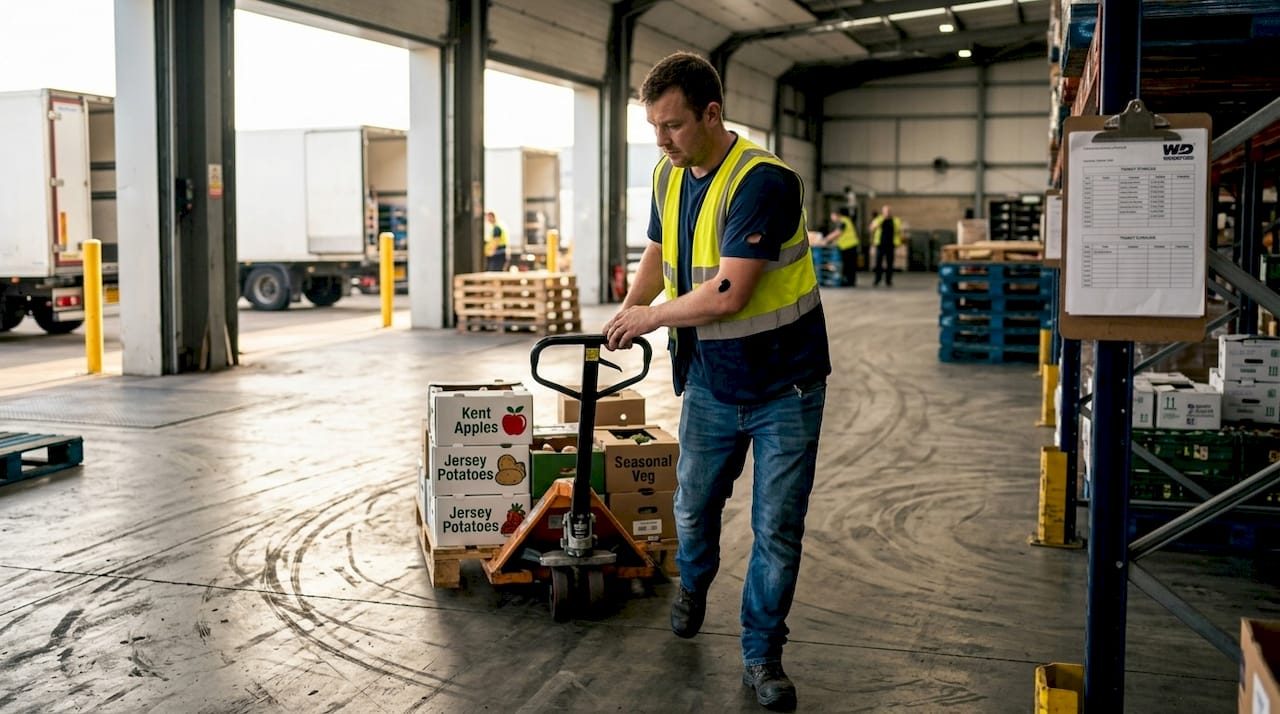
What is cross-docking in food logistics: a guide
Many food retailers assume that holding large warehouse stock is the only way to ensure supply continuity, but this approach ties up capital and increases spoilage risk. Cross-docking offers a smarter alternative by moving products directly from inbound to outbound transport with minimal storage time. This guide explains what cross-docking is, its benefits for food logistics, the different operational models available, and practical steps to implement it successfully in your supply chain operations.
Table of Contents
Key takeaways
Understanding cross-docking in food logistics
Benefits of cross-docking for food retailers and logistics professionals
Types of cross-docking and comparison for food logistics
Implementing cross-docking in your food logistics operations
Explore Woodford’s food logistics solutions
Frequently asked questions
Key Takeaways
Point | Details |
|---|---|
Storage time reduction | Cross docking moves goods directly from inbound to outbound with minimal storage, cutting spoilage and freeing capital. |
Freshness and safety | Fewer handling steps reduce contamination risk and help maintain temperature control and traceability across the supply chain. |
Coordinated logistics | Successful cross docking requires precise coordination between suppliers and retailers to align inbound and outbound schedules. |
Technology and layout | Technology and a well designed facility layout are central to achieving efficient cross docking. |
Understanding cross-docking in food logistics
Cross-docking is a logistics practice where inbound products are sorted and immediately shipped to outbound destinations without long-term storage. Products arrive at a distribution centre, get sorted by destination, and depart within hours rather than days or weeks. This approach fundamentally differs from traditional warehousing, where goods sit in storage until orders trigger their release.
Traditional warehousing involves receiving products, storing them in designated locations, picking items when orders arrive, and then shipping them out. Cross-docking eliminates the storage and picking steps entirely. Products move through the facility in a continuous flow, dramatically reducing the time between supplier shipment and retailer delivery.
The cross-docking process for food products follows a tight sequence:
Inbound trucks arrive with pre-sorted or mixed product loads at scheduled times
Workers unload and immediately sort products by destination retailer or delivery route
Sorted products move directly to outbound loading docks where delivery trucks wait
Outbound trucks depart with consolidated loads for multiple delivery points
Timing and coordination are everything in cross-docking. Inbound and outbound schedules must align precisely to avoid products sitting idle. Even a few hours of delay can create congestion and undermine the efficiency gains that make cross-docking worthwhile.
Cross-docking supports just-in-time delivery models by synchronising supplier shipments with retailer demand, reducing the need for safety stock and enabling leaner inventory management across the supply chain.
This approach works particularly well for food products with short shelf lives, where every hour in transit or storage affects quality and saleable lifespan. Perishable items like fresh produce, dairy, and chilled prepared foods benefit most from the speed that cross-docking provides.
Benefits of cross-docking for food retailers and logistics professionals
Reduced storage times limit product spoilage and improve freshness. When food products spend hours rather than days in distribution facilities, they reach retailers and consumers closer to peak quality. This matters enormously for items with tight use-by dates or quality degradation over time.
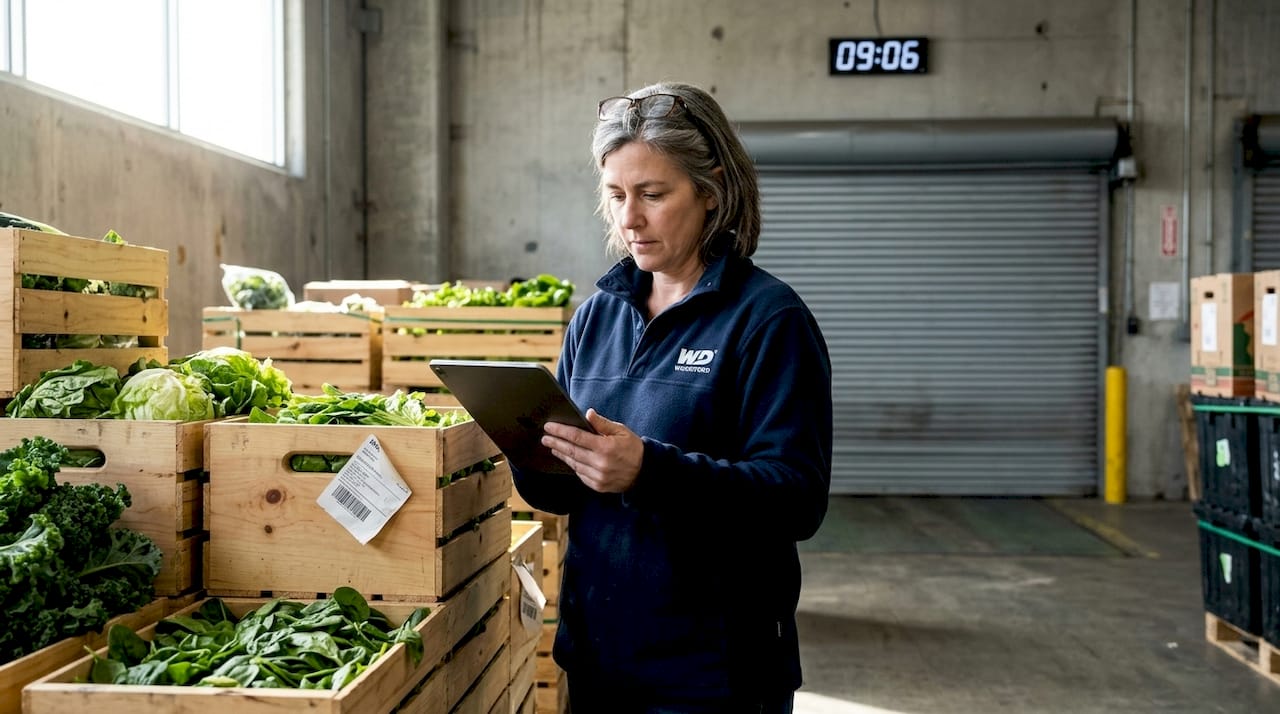
Minimising handling and storage time helps maintain food safety standards and product freshness throughout the supply chain. Fewer touchpoints reduce contamination risk and simplify traceability when issues arise. Quicker product turnover also helps retailers maintain compliance with safety regulations that mandate specific temperature controls and handling procedures.
Lower warehousing costs and labour requirements emerge from streamlined operations. Cross-docking eliminates expenses associated with long-term storage, including rent for warehouse space, utilities for climate control, and staff time for inventory management. Facilities can operate with smaller footprints and focus labour on rapid sorting rather than storage management.
Pro tip: Collaborate closely with suppliers to coordinate deliveries precisely and avoid bottlenecks. Share real-time schedule updates and establish clear communication protocols for delays or changes. This coordination prevents trucks queuing at docks and products sitting idle.
Cross-docking supports sustainability goals by reducing waste significantly in distribution processes. Less spoilage means fewer products discarded before reaching consumers. Reduced warehouse energy use for lighting and climate control lowers carbon footprints. Consolidated shipments improve transport efficiency by maximising truck capacity utilisation.
Improved supply chain responsiveness benefits both suppliers and retailers:
Suppliers gain faster payment cycles as products move to sale more quickly
Retailers respond to demand changes without waiting for warehouse stock rotation
Both parties reduce working capital tied up in inventory
Market trends and consumer preferences can be addressed with shorter lead times
Food waste reduction through cross-docking can reach 30% in optimised distribution networks, particularly for highly perishable categories where traditional warehousing creates significant loss points. This translates directly to improved margins and reduced environmental impact across the supply chain.
Types of cross-docking and comparison for food logistics
Pre-distribution cross-docking involves planned shipments where products are sorted at the supplier’s facility before arriving at the cross-dock centre. Suppliers prepare orders for specific retailers, label them accordingly, and ship consolidated loads. At the cross-dock, workers simply move pre-sorted items to the appropriate outbound trucks without additional sorting. This model works best with stable demand patterns and established supplier-retailer relationships.
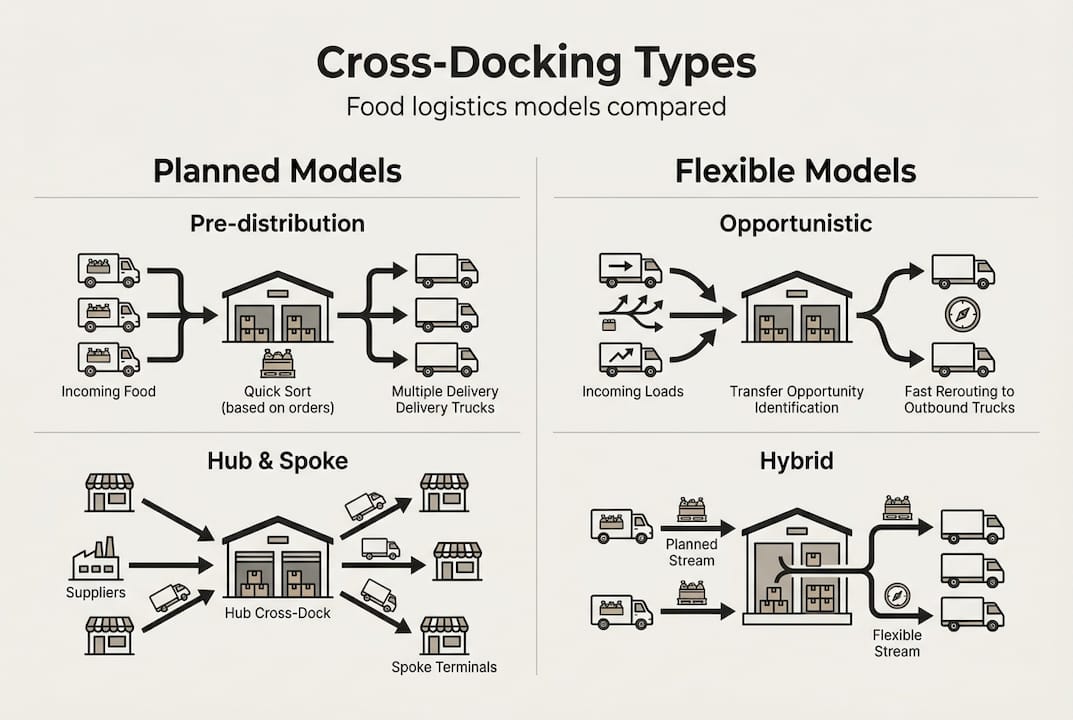
Hub-and-spoke cross-docking uses a central distribution hub that receives products from multiple suppliers and redistributes them to multiple retailers. The hub becomes a consolidation point where diverse product ranges combine into retailer-specific loads. This model suits food wholesalers serving many independent retailers across a region, enabling smaller retailers to access product variety without dealing with numerous supplier relationships.
Opportunistic cross-docking handles unscheduled or variable shipments where sorting decisions happen at the cross-dock based on current demand. Products arrive without predetermined destinations, and logistics managers allocate them to outbound routes based on real-time retailer orders and inventory levels. This flexibility helps manage unpredictable supply or demand fluctuations.
Cross-docking type | Key features | Advantages | Challenges | Best for |
|---|---|---|---|---|
Pre-distribution | Supplier sorts before shipping | Fastest dock processing, minimal labour | Requires supplier capability and coordination | Large retailers with predictable volumes |
Hub-and-spoke | Central consolidation point | Broad product range, efficient regional distribution | Higher facility requirements, complex scheduling | Wholesalers serving multiple independents |
Opportunistic | Flexible, demand-driven sorting | Adapts to variability, responsive to market changes | Higher labour needs, requires real-time systems | Variable demand, seasonal products |
Different cross-docking types suit varying supply chain sizes, product types, and retailer needs in food logistics. Choosing the right model depends on your operational scale, product mix, and relationship dynamics with suppliers and customers.
Logistics requirements and operational challenges vary by model:
Pre-distribution demands strong supplier partnerships and advance planning capabilities
Hub-and-spoke requires larger facilities with multiple dock doors and sophisticated routing
Opportunistic needs robust IT systems for real-time decision making and flexible staffing
Many successful food logistics operations combine elements of multiple models, using pre-distribution for core product lines whilst maintaining opportunistic capability for promotional items or seasonal variations. The key is matching your cross-docking approach to your specific supply chain characteristics and business objectives.
Implementing cross-docking in your food logistics operations
Setting up a cross-docking operation in a food logistics environment follows a systematic process:
Assess your current supply chain flows and identify products suitable for cross-docking based on volume, predictability, and perishability
Design facility layout with separate inbound and outbound dock areas, clear sorting zones, and direct flow paths between them
Invest in technology infrastructure for real-time tracking, scheduling coordination, and inventory visibility across the supply chain
Establish supplier agreements specifying delivery windows, product labelling requirements, and quality standards
Train staff on rapid sorting procedures, quality checks, and equipment operation specific to cross-docking workflows
Pilot the operation with a limited product range or single supplier relationship before scaling up
Monitor performance metrics continuously and refine processes based on data insights
Layout design is crucial for facilitating rapid unloading, sorting, and loading. The ideal cross-dock facility features doors on opposite sides, creating a straight flow path from inbound to outbound. Sorting zones in the centre provide space for temporary staging without creating bottlenecks. Clear floor markings, designated staging areas for each outbound route, and adequate lighting support speed and accuracy.
Technology plays an essential role in efficient cross-docking with well-designed warehouse layouts and integrated IT systems for tracking and scheduling. Warehouse management systems coordinate inbound and outbound schedules, ensuring trucks arrive when needed. Barcode scanning or RFID technology tracks products through the facility, providing real-time visibility. Transportation management systems optimise routing and consolidate loads for maximum efficiency.
Coordination tips for managing suppliers and carrier schedules effectively include establishing clear communication channels, sharing schedule visibility across all parties, and building buffer time into plans for unexpected delays. Regular coordination meetings help identify recurring issues and collaborative solutions. Penalty and incentive structures can encourage on-time performance from suppliers and carriers.
Staff training should focus on speed and accuracy in handling products. Workers need to understand product identification systems, quality inspection criteria, and proper handling techniques for different food categories. Cross-training across multiple roles provides flexibility when volume fluctuates or absences occur. Regular refresher training maintains standards as procedures evolve.
Pro tip: Regularly review performance metrics and adjust flows to continuously improve efficiency. Track dock-to-stock time, sorting accuracy, product damage rates, and schedule adherence. Use this data to identify bottlenecks, training needs, and process improvements that compound into significant gains over time.
Explore Woodford’s food logistics solutions
Woodford offers a range of quality food products tailored to retailer needs, supporting independent food businesses across the UK with reliable supply and flexible ordering options. Our logistics expertise complements efficient supply chain techniques like cross-docking, helping you maintain product freshness whilst reducing operational complexity. We bridge the gap between visionary food brands and ambitious retailers through exclusive distribution and trend-led curation. Explore our food solutions to discover how we support retail success, review our solutions for retailers for partnership opportunities, and browse our brands to see the quality products we distribute.
Frequently asked questions
What is cross-docking in food logistics?
Cross-docking is a distribution method where food products move directly from inbound to outbound transport with minimal or no storage time. Products arrive at a facility, get sorted by destination, and immediately load onto delivery vehicles. This approach reduces handling, maintains freshness, and speeds up supply chain flows compared to traditional warehousing.
How does cross-docking reduce food waste?
Cross-docking minimises storage time and handling, reducing spoilage risk for perishable products. Products spend hours rather than days in distribution facilities, maintaining quality and extending shelf life at retail. Faster delivery means items reach consumers closer to peak freshness, reducing waste throughout the supply chain.
What types of cross-docking are best for small UK food retailers?
Pre-distribution cross-docking works well for retailers with predictable demand and established supplier relationships, as products arrive pre-sorted and ready for delivery. Opportunistic cross-docking offers flexibility for retailers with irregular shipments or variable demand patterns. Many small retailers benefit from hub-and-spoke models through wholesaler partnerships that provide product variety without managing multiple supplier relationships.
What are common challenges when implementing cross-docking?
Cross-docking requires precise timing and coordination of inbound and outbound shipments to prevent bottlenecks. Initial investment in facility layout modifications and technology infrastructure can be substantial. Staff must adapt to faster processing workflows and maintain accuracy under time pressure. Supplier cooperation is essential, and not all suppliers can meet the scheduling and labelling requirements that cross-docking demands.
How can technology support cross-docking efficiency?
Real-time tracking systems enhance shipment visibility, allowing logistics managers to coordinate arrivals and departures precisely. Scheduling software synchronises inbound and outbound flows, reducing idle time and dock congestion. Data analytics identifies bottlenecks, predicts volume patterns, and highlights improvement opportunities. Warehouse management systems automate sorting decisions and guide workers to correct staging locations, improving speed and accuracy.