Navigating UK food logistics for wholesalers in 2026
Discover practical strategies for UK food wholesalers and retailers to optimise logistics, reduce costs, and build resilient distribution networks in 2026.
Navigating UK food logistics for wholesalers in 2026
UK food wholesalers and independent retailers face mounting logistics challenges from rising costs, labour shortages, and supply chain disruptions that threaten distribution efficiency. Effective logistics strategies are essential to maintain competitiveness and ensure reliable delivery of perishable goods across the nation. This comprehensive guide explores practical approaches to optimise transport, warehousing, and technology integration, helping you build resilient operations that meet customer demands whilst managing costs. You will discover actionable insights on selecting the right logistics partners, leveraging strategic locations, and implementing systems that streamline your supply chain from source to shelf.
Table of Contents
Key takeaways
Understanding the UK food logistics landscape
Preparing your logistics strategy: key components and requirements
Executing efficient food logistics operations
Verifying logistics performance and continuous improvement
Explore Woodford’s tailored logistics solutions
Frequently asked questions
Key Takeaways
Point | Details |
|---|---|
Direct temperature controlled transport | Prioritising direct temperature controlled transport for perishables minimises spoilage and protects product quality across distribution. |
Midlands Golden Triangle | Strategic warehouse locations around the Midlands Golden Triangle offer better market access and shorter delivery times. |
WMS and AI investment | Investing in warehouse management systems and artificial intelligence enables accurate inventory control and demand forecasting. |
Short and hybrid supply chains | Short and hybrid supply chains build resilience against disruptions while supporting sustainability goals. |
Efficiency to manage costs | Enhancing efficiency helps manage rising costs and labour challenges while maintaining service levels. |
Understanding the UK food logistics landscape
The UK food logistics sector operates within a complex environment shaped by economic pressures, infrastructure constraints, and evolving regulatory requirements. UK food logistics faces rising costs, labour shortages, and decarbonisation pressures, pushing adoption of intermodal transport, automation, and resilient infrastructure. Inflation continues to drive up operating expenses across fuel, labour, and warehouse business rates, whilst Brexit-related workforce gaps compound staffing challenges. Decarbonisation targets require wholesalers to invest in cleaner transport options and reduce carbon footprints across operations.
Most UK food distribution relies on just-in-time supply chains that minimise inventory holding costs but create vulnerability to disruption. A single delay in transport or production can cascade through the network, leaving retailers without stock and customers disappointed. This fragility became evident during recent supply shocks, highlighting the need for buffer capacity and alternative routing options. Building redundancy into your logistics network may increase costs slightly but provides insurance against revenue losses from stockouts.
The Midlands Golden Triangle, encompassing areas around Leicester, Northampton, and Birmingham, serves as the UK’s premier logistics hub due to its central location and motorway access. This region offers excellent connectivity to major population centres, reducing delivery times and transport costs for nationwide distribution. Regional distribution centres within this area enable efficient consolidation and deconsolidation of shipments, whilst proximity to major ports supports import-export operations. Warehouse availability and competitive rates make this location attractive for wholesalers seeking to optimise their distribution footprint.
Key warehouse types supporting food logistics include:
Regional distribution centres handling large volumes for onward delivery to retail locations
Temperature-controlled facilities maintaining cold chain integrity for perishables
Cross-docking terminals enabling rapid transfer between inbound and outbound vehicles
E-commerce fulfilment centres supporting direct-to-consumer delivery channels
Automation and artificial intelligence integration are transforming modern logistics operations by reducing manual labour requirements and improving accuracy. Automated storage and retrieval systems increase warehouse capacity utilisation whilst reducing picking errors. AI-powered demand forecasting helps optimise inventory levels, preventing both stockouts and excess holding costs. Route optimisation algorithms calculate the most efficient delivery sequences, cutting fuel consumption and vehicle wear. Investing in these technologies positions your operation for long-term competitiveness as labour costs continue rising.
Pro Tip: Partner with Woodford to access established logistics infrastructure and expertise without the capital investment required to build your own network.
Preparing your logistics strategy: key components and requirements
Developing an effective logistics strategy begins with selecting the appropriate transport mode for your product mix and service requirements. Direct haulage with temperature-controlled fleets is preferred for perishables to reduce handling risks, constituting 8-10% operating costs for food producers. This approach maintains cold chain integrity by minimising transfer points where temperature excursions can occur. Dedicated vehicles provide greater control over delivery schedules and reduce the risk of cross-contamination from mixed loads. Whilst more expensive than consolidated transport, direct haulage offers superior reliability for time-sensitive and temperature-sensitive products.
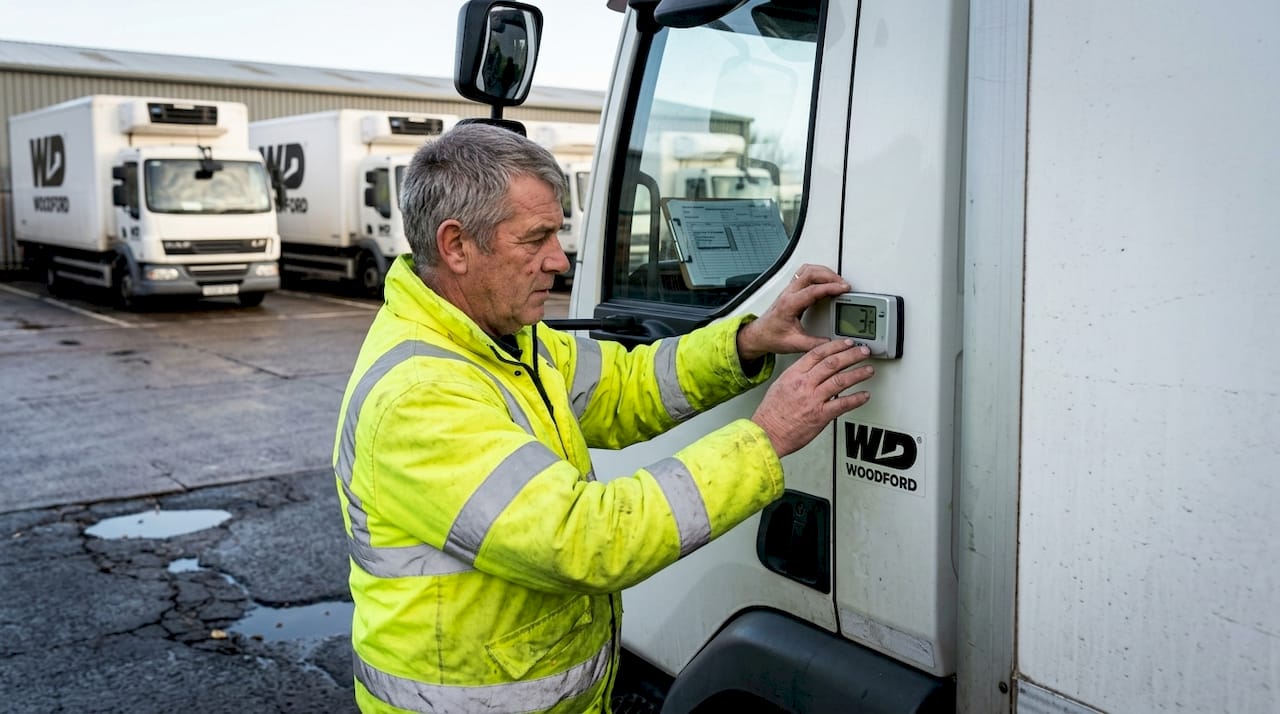
Temperature-controlled fleet requirements vary based on product categories and regulatory compliance needs. Chilled products typically require 0-5°C, whilst frozen goods demand -18°C or below throughout transport. Modern refrigerated vehicles feature multi-temperature zones allowing mixed loads of chilled and frozen products in a single delivery run. GPS tracking and temperature monitoring systems provide real-time visibility into fleet performance and enable rapid response to equipment failures. Ensuring your logistics partner maintains well-serviced vehicles and backup capacity prevents costly product losses from refrigeration breakdowns.
Warehouse type | Typical size | Location priority | Technology needs |
|---|---|---|---|
Regional distribution centre | 100,000-500,000 sq ft | Midlands Golden Triangle | WMS, automation |
Temperature-controlled facility | 50,000-200,000 sq ft | Near production or retail clusters | Cold chain monitoring |
Cross-docking terminal | 30,000-100,000 sq ft | Major motorway junctions | Real-time tracking |
E-commerce fulfilment | 50,000-150,000 sq ft | Near urban centres | Pick-pack systems |
Warehouse selection depends on your operational scale, product range, and geographic coverage requirements. Regional distribution centres suit wholesalers serving multiple retail locations across wide areas, providing economies of scale in handling and transport consolidation. Smaller operations may benefit from shared warehouse facilities that reduce fixed costs whilst maintaining professional standards. Location choices should balance proximity to customers against property costs, with the Midlands offering optimal trade-offs for national distribution. Evaluate potential sites based on transport links, labour availability, and expansion capacity to support future growth.
Implementing warehouse management systems transforms inventory control from manual record-keeping to real-time digital tracking. WMS software automates receiving, putaway, picking, and dispatch processes whilst maintaining accurate stock records. Integration with transport management systems enables seamless coordination between warehouse operations and delivery schedules. AI-enhanced WMS platforms learn from historical patterns to optimise storage locations and picking routes, reducing labour hours per order. Whilst initial implementation requires investment and training, the efficiency gains typically deliver payback within 18-24 months.
Key cost components requiring careful management include:
Labour costs averaging 30-40% of total logistics expenses
Fuel and vehicle maintenance representing 20-30% of operating budgets
Warehouse business rates and property costs consuming 15-25% of expenditure
Technology and systems maintenance accounting for 5-10% of spending
Pro Tip: Explore food logistics technology solutions that integrate seamlessly with your existing systems to avoid costly custom development.
Executing efficient food logistics operations
Operational excellence in food logistics requires systematic planning and continuous monitoring to maintain service levels whilst controlling costs. Route optimisation software calculates the most efficient delivery sequences based on customer locations, time windows, and vehicle capacity constraints. These systems account for traffic patterns, road restrictions, and driver hours regulations to generate realistic schedules. Optimised routing reduces total mileage by 10-20%, cutting fuel costs and vehicle emissions whilst enabling more deliveries per shift. Regular route reviews identify opportunities to consolidate stops or adjust territories as customer patterns evolve.
Vetting logistics partners demands rigorous evaluation of their operational capabilities and financial stability. On-time in full delivery performance should consistently exceed 95% to maintain retail customer satisfaction and avoid costly emergency replenishment. Insurance coverage must include product liability, goods in transit, and employer’s liability at levels appropriate to your product values and risk profile. Request references from existing clients and conduct site visits to assess warehouse conditions, equipment maintenance, and staff training standards. Establishing clear service level agreements with penalties for non-performance ensures accountability and provides recourse when issues arise.
Implementing automation addresses labour shortages whilst improving accuracy and throughput. Automated guided vehicles transport pallets within warehouses without manual forklift operation, reducing accident risks and enabling 24/7 operations. Robotic picking systems handle repetitive tasks with consistent precision, freeing human workers for complex activities requiring judgement. Voice-directed picking systems guide warehouse staff through optimal routes whilst keeping their hands free for handling products. Even partial automation delivers measurable benefits, with many operations achieving 20-30% productivity improvements from targeted investments.
Steps to optimise inventory management:
Implement perpetual inventory counting to maintain accurate stock records without full facility shutdowns
Establish minimum and maximum stock levels for each product based on demand variability and lead times
Use ABC analysis to prioritise management attention on high-value items whilst streamlining handling of low-value products
Monitor stock age and implement first-in-first-out rotation to minimise wastage of perishable goods
Integrate sales data with inventory systems to trigger automatic replenishment when stock falls below reorder points
Review slow-moving inventory monthly and implement promotional strategies to clear excess stock before expiry
Monitoring and managing inventory prevents both stockouts that lose sales and excess holdings that tie up working capital. Wholesalers are investing in technology to improve efficiency amid inflation and labour challenges; slowing demand from independents pressures operations. Real-time visibility into stock levels across your network enables proactive decision-making about transfers between locations or promotional activities to move ageing inventory. Accurate forecasting reduces safety stock requirements, freeing capital for business growth whilst maintaining service levels.
Adapting to market pressures requires flexibility in operations and willingness to revise established practices. Inflation in fuel, labour, and property costs demands continuous efficiency improvements to protect margins without passing all increases to customers. Competition from supermarket wholesale arms pressures independent retailers, affecting order volumes and frequency. Diversifying your customer base across different retail formats and geographic areas reduces vulnerability to sector-specific challenges. Staying informed about current logistics innovations helps identify opportunities to gain competitive advantage through early adoption of proven technologies.
Pro Tip: Establish backup logistics arrangements before disruptions occur, ensuring you can maintain deliveries even when primary routes or facilities become unavailable.
Verifying logistics performance and continuous improvement
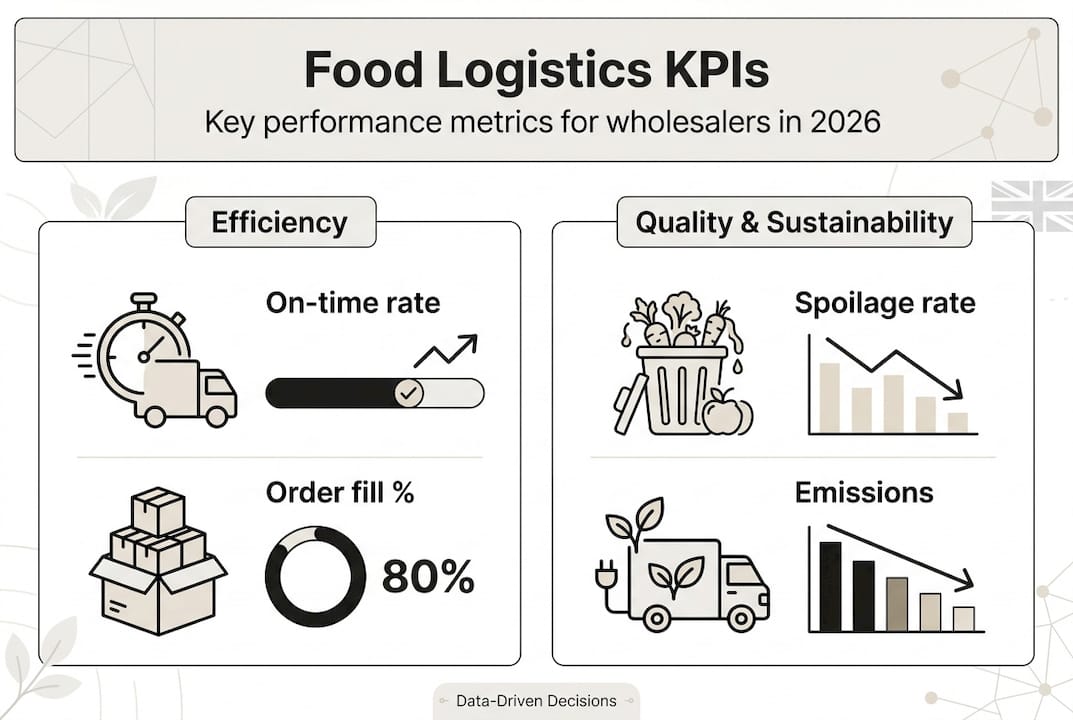
Measuring logistics performance requires tracking key performance indicators that reflect both efficiency and service quality. On-time in full delivery percentage indicates reliability from the customer perspective, with leading operations achieving 98% or better. Transport cost as a percentage of sales revenue benchmarks efficiency, with typical food wholesale operations targeting 8-12% depending on product mix and delivery density. Carbon footprint per tonne-kilometre tracks environmental performance, supporting sustainability reporting and identifying opportunities to reduce emissions through modal shifts or route optimisation.
Supply chain type | Resilience | Scalability | Sustainability | Complexity |
|---|---|---|---|---|
Short supply chain | High | Low | High | Low |
Long supply chain | Low | High | Medium | High |
Hybrid supply chain | High | High | High | Medium |
Short food supply chains increase resilience but are limited in scale; hybrid models combining short and long chains with intermodal transport offer best sustainability and efficiency. Short chains reduce intermediaries and transport distances, enabling faster response to disruptions and better traceability. However, they typically cannot achieve the volume throughput needed for large-scale operations. Hybrid approaches maintain direct relationships with key local suppliers whilst using consolidated distribution for commodity products, balancing resilience with operational efficiency.
Adopting intermodal transport combining rail and road reduces carbon emissions whilst maintaining service levels for non-urgent deliveries. Rail transport produces approximately 76% less carbon per tonne-kilometre than road haulage, making it attractive for long-distance trunk movements. Containers transfer seamlessly between rail and road vehicles, enabling door-to-door delivery with minimal handling. Whilst intermodal journeys take longer than direct road transport, advance planning allows wholesalers to maintain inventory availability without premium freight costs. Government investment in rail freight infrastructure continues improving capacity and reliability.
Key performance metrics to monitor:
Order accuracy rate measuring correct product, quantity, and delivery location
Inventory turnover indicating efficiency of stock management
Warehouse utilisation tracking space usage against available capacity
Vehicle fill rates measuring how effectively transport capacity is used
Delivery cost per drop benchmarking efficiency across different routes
Collecting feedback from logistics partners and retail customers provides qualitative insights complementing quantitative metrics. Regular business reviews with transport providers discuss performance trends, emerging challenges, and improvement opportunities. Customer surveys identify pain points in the delivery experience that may not appear in operational data. Driver feedback highlights practical issues with delivery locations, access constraints, or documentation requirements. Creating channels for open communication builds collaborative relationships that support continuous improvement.
Investing in training and technology upgrades ensures your operation keeps pace with industry evolution. Warehouse staff training on new systems and equipment reduces errors and accelerates adoption. Driver training on fuel-efficient driving techniques and customer service skills improves both cost and quality metrics. Technology upgrades should follow a planned roadmap that prioritises highest-impact improvements whilst maintaining system integration. Partnering with specialists who can enhance supply chain resilience through proven solutions accelerates improvement without the trial-and-error costs of developing capabilities internally. Learning from industry peers through trade associations and benchmarking studies identifies best practices worth adopting in your operation.
Explore Woodford’s tailored logistics solutions
Woodford specialises in supporting UK food wholesalers and independent retailers with comprehensive distribution solutions that streamline operations and enhance supply chain resilience. Our established logistics network spans strategic locations across the UK, providing efficient access to markets without requiring you to build your own infrastructure. We combine temperature-controlled transport, advanced warehouse management systems, and expert category knowledge to deliver reliable service that protects product quality and meets customer expectations. Whether you need full-service distribution or targeted support for specific product categories, our flexible approach adapts to your unique requirements. Discover how Woodford food solutions can optimise your logistics performance, explore food logistics support for retailers tailored to independent stores, or review Woodford brands and offerings representing quality and innovation in UK food wholesale.
Frequently asked questions
What are the main challenges in UK food logistics?
UK food logistics faces labour shortages following Brexit, rising costs from inflation affecting fuel and wages, and supply chain fragility from just-in-time models vulnerable to disruption. Decarbonisation targets require investment in cleaner transport whilst maintaining service levels. Wholesalers must balance efficiency with resilience, building backup capacity and diversifying transport modes. Technology adoption helps offset labour constraints through automation and optimised routing.
How can independent retailers benefit from optimised logistics?
Optimised logistics reduces delivery delays and product spoilage, ensuring fresh inventory reaches shelves in peak condition. Independent retailers gain access to efficient, temperature-controlled transport that maintains cold chain integrity without investing in their own fleet. Tailored warehouse solutions and technology provide professional distribution capabilities previously available only to larger chains. Partnering with specialists offering logistics support for retailers enables independents to compete effectively whilst focusing resources on customer service and merchandising.
What technology is essential for efficient food logistics?
Warehouse management systems provide real-time inventory visibility and automate receiving, storage, and dispatch processes for improved accuracy. Artificial intelligence forecasts demand patterns and optimises delivery routes, reducing waste and transport costs. Automation including robotic picking and automated guided vehicles addresses labour shortages whilst improving throughput and safety. Temperature monitoring systems ensure cold chain compliance throughout storage and transport. Explore food logistics technology solutions that integrate seamlessly with existing operations.
How do short supply chains improve sustainability and resilience?
Short supply chains reduce intermediaries and transport distances, cutting greenhouse gas emissions and enabling faster response to disruptions. Enhanced traceability through fewer handoffs improves food safety and quality control. Local sourcing supports regional economies and reduces vulnerability to international supply shocks. Combining short chains for key products with efficient long-distance distribution for commodities creates hybrid models offering both sustainability and scale. Rail and electric vehicles further lower emissions in distribution networks. Learn how to enhance supply chain resilience through strategic sourcing and logistics partnerships.