Strategic food brands for UK independent retailers
Discover how independent UK food retailers select strategic brands to build credibility, drive growth, and create customer loyalty through quality and authenticity.

Strategic food brands for UK independent retailers
Independent food retailers in the UK face a critical decision: which food brands will truly resonate with their customers and drive sustainable growth? While supermarkets dominate by volume, 46% of UK consumers shop independents monthly, revealing a significant opportunity for retailers who curate the right brand partnerships. Strategic brand selection isn’t just about stocking shelves; it’s about building credibility, differentiating your offering, and creating genuine customer loyalty. This guide explains the criteria, benefits, and practical approaches that empower independent retailers to select food brands that align with their values and accelerate growth in an increasingly competitive market.
Table of Contents
Key takeaways
Why strategic brand selection matters for independent retailers
Core criteria for selecting strategic food brands
Local and sustainable sourcing as growth drivers
Balancing risks and opportunities: independents versus supermarkets
Explore strategic food brands with Woodford
Frequently asked questions
Key Takeaways
Point | Details |
|---|---|
Credibility through brand choice | Strategic brand selection strengthens customer trust and reinforces store credibility through carefully chosen partnerships. |
Quality provenance alignment | Quality provenance and sustainability alignment helps brands meet shopper expectations and supports authentic storytelling. |
Local sourcing boosts sales | Local sourcing boosts sales and strengthens community ties by aligning with customer values. |
Reliable supply chains essential | Reliable supply chains prevent stock issues and delisting risk, safeguarding customer trust. |
Agility through curated ranges | Independents excel through agility and clear differentiation from mass market rivals. |
Why strategic brand selection matters for independent retailers
Independent food retailers build their reputation through every brand they stock. Unlike supermarkets that compete on price and convenience, independents thrive by offering curated selections that reflect their customers’ values and aspirations. Strategic brand choices directly influence customer trust, store credibility, and long-term profitability.
When you select brands thoughtfully, you’re not just filling shelf space. You’re creating a testing ground for innovative products whilst gaining direct customer feedback that larger retailers struggle to capture. This agility allows you to pivot quickly, responding to emerging trends before they reach mainstream channels. Wholesalers who supply independents provide brands with access to niche audiences actively seeking quality and authenticity.
Consumer behaviour supports this approach. 46% of UK consumers shop independents monthly, demonstrating substantial market opportunity beyond supermarket dominance. Shoppers increasingly prioritise quality over volume, seeking retailers who share their values around sustainability, provenance, and community engagement. This shift creates a competitive advantage for independents willing to invest in understanding motivations of independent retailers and selecting brands that deliver genuine differentiation.
Strategic brand selection also helps independents compete against supermarkets’ volume dominance. Rather than matching prices on commodity products, successful independents focus on food brand selection to stand out through unique offerings that supermarkets can’t or won’t stock. This positioning attracts customers willing to pay premium prices for products that align with their values and deliver superior quality.
Key benefits of strategic brand selection include:
Enhanced store credibility through curated quality products
Faster response to consumer trends and preferences
Direct customer feedback enabling rapid product iteration
Access to loyal niche audiences seeking authenticity
Competitive differentiation versus price-focused supermarkets
Stronger supplier relationships built on mutual growth
Core criteria for selecting strategic food brands
Selecting the right food brands requires systematic evaluation across multiple dimensions. Product quality and taste form the foundation. Customers return to your store because products consistently meet or exceed expectations. Brands must demonstrate rigorous quality control, transparent ingredient sourcing, and flavour profiles that resonate with your target audience.
Brand strength and consumer awareness matter significantly. Whilst independents excel at introducing emerging brands, some level of recognition or compelling storytelling helps customers feel confident in their purchase decisions. Brands with clear positioning, authentic narratives, and growing social proof tend to perform better than completely unknown alternatives.
Supply chain reliability prevents the costly problem of product delisting. When brands can’t maintain consistent stock levels, retailers face customer disappointment and lost sales. Before committing to a brand partnership, assess their production capacity, distribution network, and track record for on-time delivery. Brands proving quality and provenance in brand selection through reliable operations earn long-term shelf space.
Alignment with retailer values drives customer loyalty. Brands are selected based on alignment with values like quality, provenance, sustainability, and consumer trends, ensuring your product range reflects what your customers care about most. When your brand portfolio consistently demonstrates commitment to sustainability, ethical sourcing, or local production, customers recognise this coherence and reward it with repeat purchases. This alignment isn’t superficial; 57% of shoppers prioritise sustainability in buying decisions, making values-based selection a commercial imperative.
Proof of sales in other channels provides risk mitigation. Brands successfully selling through complementary channels like farmers’ markets, online platforms, or other independents demonstrate validated customer demand. This track record reduces your risk whilst confirming the brand’s ability to generate sales beyond your specific store.
Pro Tip: Assess the scalability of supply to match growing demand. Brands that can’t scale production as your sales increase will eventually force you to delist products your customers love, damaging relationships and revenue. Engage with brand owner resources to understand their growth capacity before committing.
Essential selection criteria:
Product quality meeting consistent taste and ingredient standards
Brand positioning with clear storytelling and growing recognition
Supply chain capacity ensuring reliable stock availability
Values alignment reflecting sustainability and ethical practices
Proven sales performance in complementary retail channels
Scalability potential supporting your store’s growth trajectory
Local and sustainable sourcing as growth drivers
Local sourcing creates powerful competitive advantages for independent retailers. When you stock products from nearby producers, you’re not just selling food; you’re connecting customers to their community and reinforcing your role as a local champion. This emotional connection translates directly into customer loyalty and increased spending.
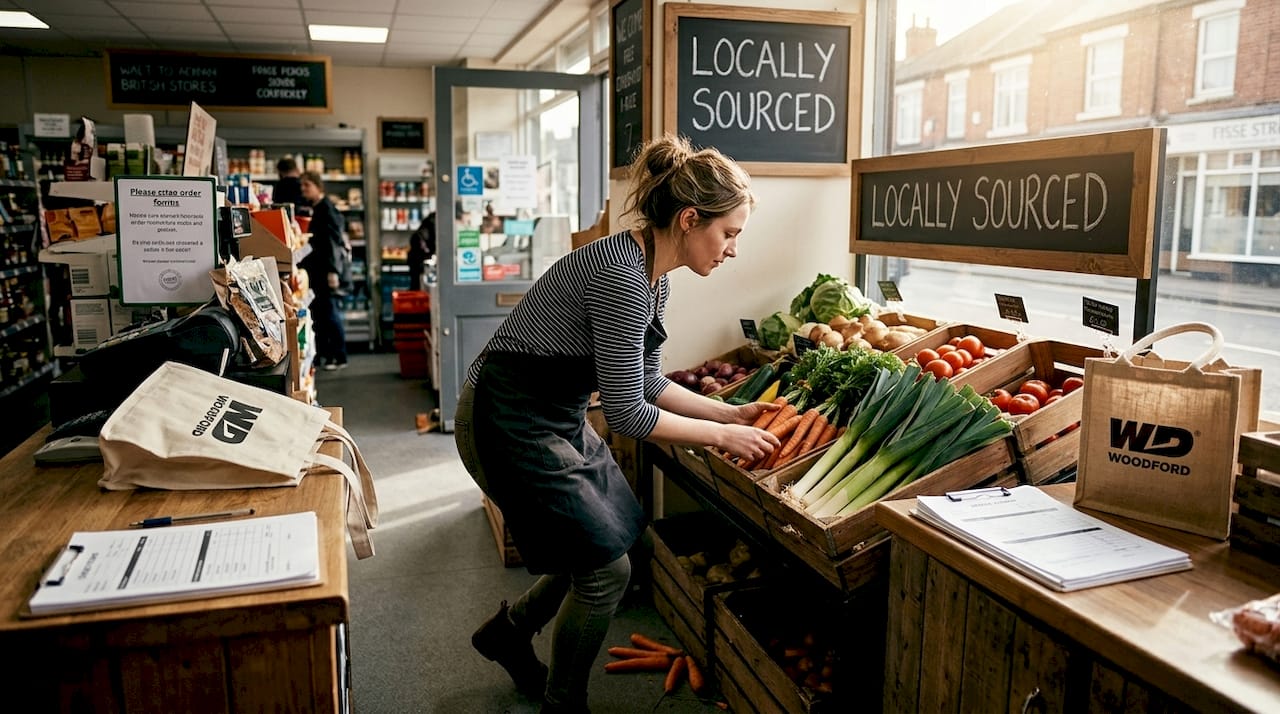
Sustainability preferences influence purchasing decisions at scale. 57% of shoppers prioritise sustainability, making environmental credentials a commercial advantage rather than a niche consideration. Customers actively seek retailers offering products with transparent supply chains, minimal packaging, and reduced carbon footprints. By curating local and sustainable brands, you position your store as aligned with these priorities.
Empirical evidence demonstrates tangible sales benefits. The Scottish Go Local project revealed that 44% sales increase in Scottish local compliant products; 36% more products stocked when retailers committed to local sourcing strategies. These aren’t marginal gains; they represent substantial revenue growth driven by customer preference for provenance and authenticity.
Metric | Local sourcing impact | Benchmark |
|---|---|---|
Sales growth | 44% increase | Scottish local products |
Product range expansion | 36% more products | Local compliant items |
Customer engagement | Higher loyalty | Provenance storytelling |
Sustainability priority | 57% of shoppers | Purchasing decisions |
Local sourcing also reduces supply chain complexity and environmental impact. Shorter distances mean fresher products, lower transport costs, and reduced carbon emissions. These operational benefits complement the marketing advantages, creating a compelling business case beyond customer preference alone.
Authentic provenance stories amplify these benefits. Customers don’t just want local products; they want to understand the people, places, and processes behind them. Retailers who invest in telling these stories through signage, social media, and staff training create deeper emotional connections that drive repeat purchases and word-of-mouth recommendations.
Pro Tip: Promote provenance stories prominently to leverage consumer interest. Feature producer profiles, farm visits, and behind-the-scenes content that brings your local brands to life. This storytelling differentiates your store whilst justifying premium pricing through transparency and authenticity. Detailed step by step brand selection processes help identify brands with compelling narratives.
Balancing risks and opportunities: independents versus supermarkets
Independent retailers and supermarkets approach brand selection from fundamentally different perspectives. Supermarkets prioritise volume, wide geographic reach, and standardised logistics. This focus creates opportunities for brands seeking massive scale but often marginalises smaller producers who can’t meet volume requirements or afford listing fees. Supermarket buyers typically demand proven sales data, extensive marketing support, and prices that fit their promotional strategies.
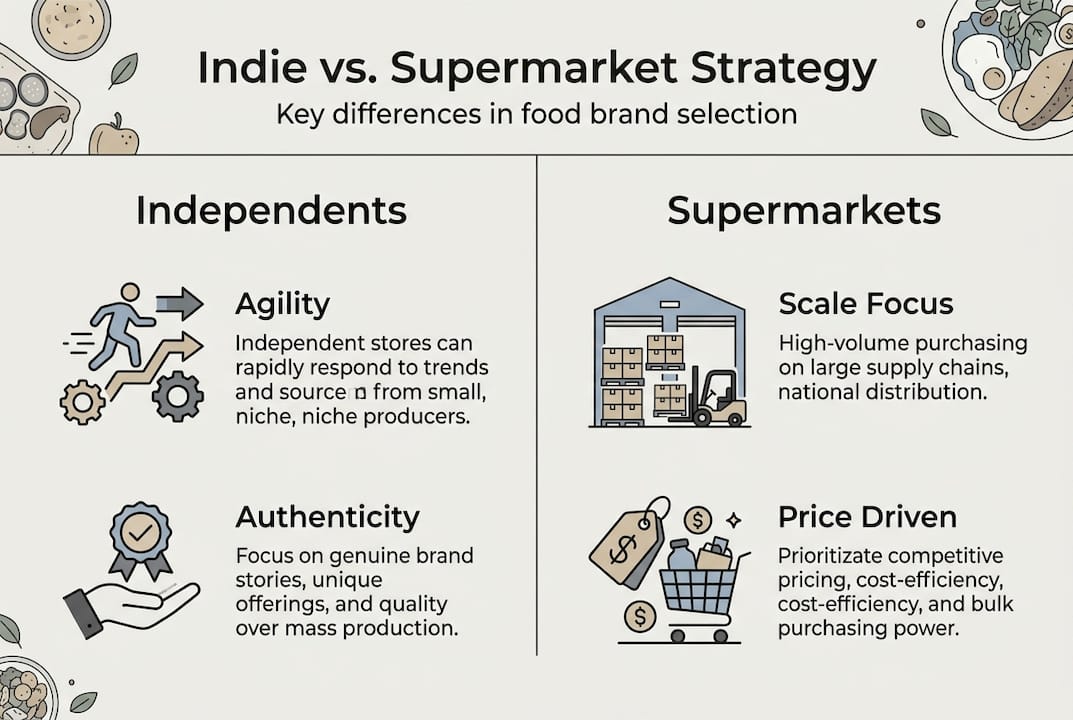
Independents offer distinct advantages: agility, authenticity, and customer trust. You can trial new brands quickly, gather direct customer feedback, and adjust your range without navigating complex corporate approval processes. This flexibility makes independents ideal partners for emerging brands building their reputation and refining their products. Your customers often value discovery and uniqueness over the predictability of supermarket shelves.
However, supply chain scalability remains critical. Brands must demonstrate capacity to serve your needs consistently without overextending their production capabilities. Product delisting damages customer relationships and wastes your investment in merchandising and promotion. Before committing to a brand, assess their ability to maintain stock levels as your sales grow.
Indies hold 5% market share but grow through differentiation versus price wars, highlighting the importance of strategic positioning. Rather than competing on price with supermarkets, successful independents focus on unique value propositions that justify premium pricing. This approach requires careful brand curation and clear communication of the benefits customers receive.
Industry experts recommend caution when brands rush toward supermarket listings. Avoid rushing supermarkets due to risks; focus on incremental trading up customers suggests that brands often benefit more from building loyal customer bases through independents before scaling to supermarkets. This staged approach reduces risk whilst proving product-market fit.
Steps to assess brand partnership risks:
Review production capacity and historical delivery performance
Confirm minimum order quantities align with your sales velocity
Evaluate financial stability and growth funding availability
Test products with small initial orders before full commitment
Establish clear communication channels for inventory and issues
Negotiate flexible terms allowing range adjustments based on performance
Factor | Independent retailers | Supermarkets |
|---|---|---|
Selection criteria | Quality, authenticity, values alignment | Volume, price, promotional support |
Customer relationship | Direct, personal, trust-based | Transactional, price-focused |
Brand flexibility | High agility, rapid testing | Slow approval, rigid requirements |
Market positioning | Differentiation, premium quality | Volume, convenience, low prices |
Supply requirements | Scalable but manageable volumes | Large-scale, consistent nationwide supply |
Pro Tip: Pursue incremental customer trading up to avoid direct competition with supermarkets. Focus on attracting customers willing to pay more for quality, sustainability, and authenticity rather than competing for price-sensitive shoppers. This positioning protects margins whilst building a loyal customer base that values your independent versus supermarket brand strategies.
Explore strategic food brands with Woodford
Navigating the landscape of strategic food brands requires expertise, industry connections, and a deep understanding of what independent retailers need to succeed. Woodford specialises in bridging the gap between visionary food brands and ambitious independent retailers through curated partnerships, reliable logistics, and trend-led selection.
Our portfolio features high-quality, sustainable, and locally sourced food brands specifically chosen to help independents differentiate their offerings and drive customer loyalty. We understand the challenges you face: balancing quality with profitability, maintaining consistent stock levels, and discovering brands that truly resonate with your customers’ values.
By partnering with Woodford food offerings, you gain access to exclusive distribution agreements, hassle-free logistics, and ongoing support that goes beyond simple product supply. Our team continuously evaluates emerging trends, consumer preferences, and brand performance to ensure our Woodford brand collection remains at the forefront of what independent retailers need.
We also support brand owners seeking to grow through independent retail channels, providing Woodford brand owner support that helps emerging brands scale sustainably whilst maintaining the quality and authenticity that independents demand. This dual focus ensures strong partnerships benefiting retailers, brands, and ultimately, your customers.
Frequently asked questions
What defines a strategic food brand?
A strategic food brand aligns with your store’s values, customer preferences, and growth objectives whilst delivering consistent quality and reliable supply. These brands typically demonstrate clear positioning, authentic storytelling, and commitment to sustainability or provenance. Strategic brands help differentiate your store from competitors rather than simply filling shelf space with commodity products.
How do I measure brand fit for my customers?
Start by analysing your existing sales data to identify product categories and attributes that perform well. Conduct informal customer surveys or conversations to understand their priorities around quality, sustainability, and local sourcing. Test new brands with small initial orders, monitor sales velocity, and gather direct feedback. Strong brand fit shows in repeat purchases, positive customer comments, and willingness to pay premium prices.
Can local brands be sourced reliably at scale?
Many local brands can scale effectively with proper planning and support. Assess their production capacity, distribution infrastructure, and track record with other retailers before committing. Some local producers partner with co-packers or shared kitchen facilities to increase capacity whilst maintaining quality. Clear communication about your volume requirements and growth expectations helps ensure reliable supply as your partnership develops.
What risks should independents watch when switching brands?
Customer disappointment from discontinued favourites represents the primary risk when switching brands. Mitigate this by introducing new products alongside existing ones, allowing gradual transitions based on sales performance. Supply chain disruptions, quality inconsistencies, and pricing volatility also pose risks. Establish clear performance metrics and exit criteria before committing to new brand partnerships, ensuring you can adjust quickly if issues arise.
How quickly can independents see sales growth from new strategic brands?
Timelines vary based on product category, customer awareness, and promotional support. Some brands generate immediate interest through strong packaging or existing reputation, showing sales growth within weeks. Others require three to six months of consistent stocking, sampling, and customer education before gaining traction. Track weekly sales data, customer feedback, and repeat purchase rates to assess performance and adjust your merchandising strategy accordingly.